
Behind Every “Perfect” Photo Is a Self That Is Afraid to Be Seen
Somewhere between the image you show and who you are, connection can be lost.
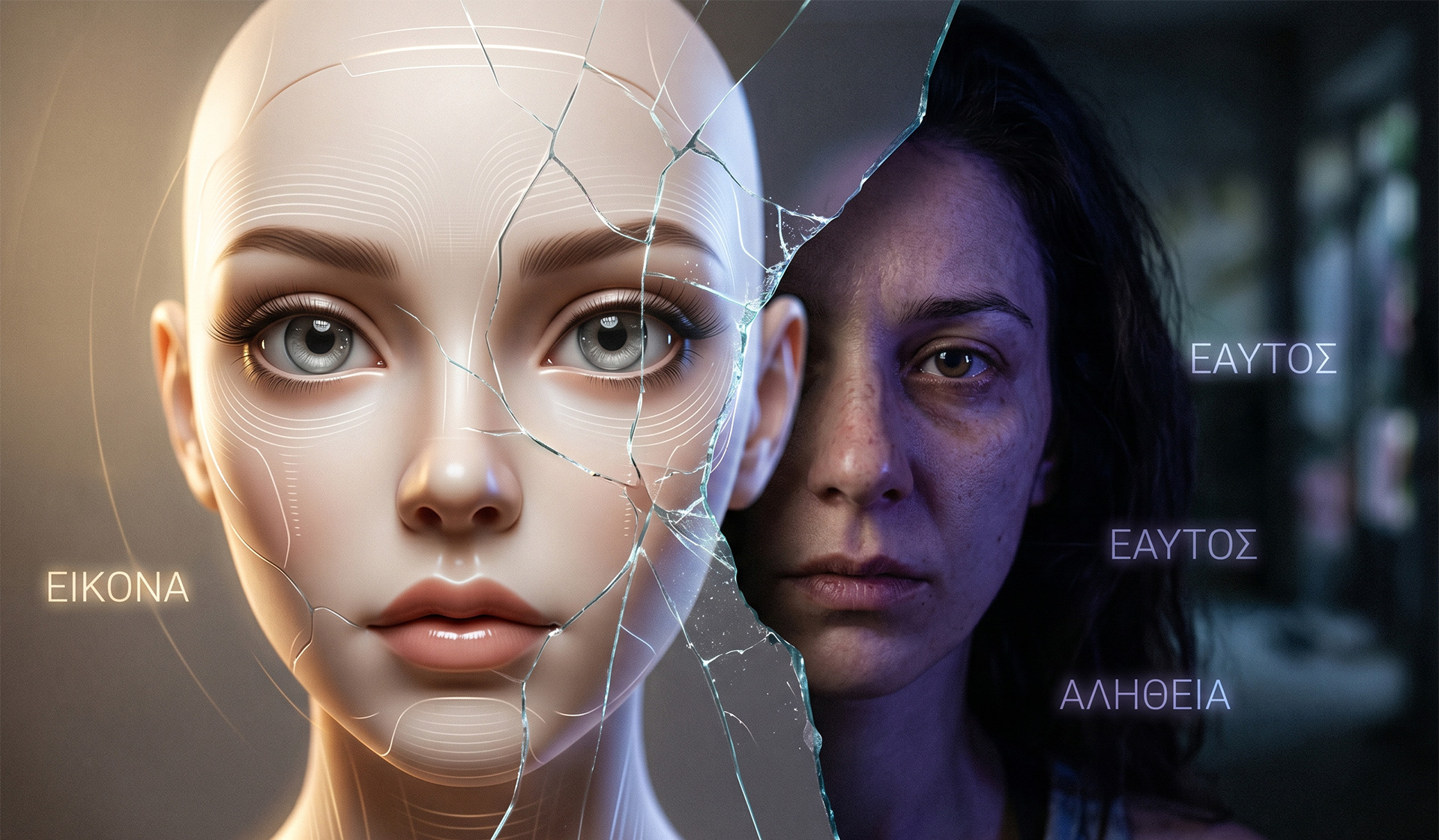
You have probably seen it too. A photograph of someone you know that resembles them, but is not really them. You sense it immediately. They are not simply brighter or more polished. They are someone else.
The skin is smoother than skin can be. The eyes are larger and brighter, yet frozen, with the look of dolls in shop windows. The face is more sculpted. The body is closer to an ideal that does not exist.
And somewhere there, a question begins to arise.
Because this is not only an image. It is a relationship with yourself.
Perhaps you too have edited a photograph of yourself. Perhaps for fun, for aesthetic reasons, or simply because it is what you see everywhere. Sometimes, that is where it ends.
But at other times, something changes.
Not on the outside. On the inside.
The image no longer illuminates who you are; it begins to replace you.
You do not begin with rejection. You begin with something small, something you do not like or wish were different. You adjust it: a little more light, a filter, a minor correction.
For a moment, you feel relief.
Because you see before you what, deep inside, you feel you should be.
And you return to it, again and again, a little further each time.
Until you are no longer correcting your image. You are replacing it.
A fracture then appears between you and what you see, between who you are and what you show.
As that distance grows, so does something else: the feeling that you are not enough.
And here lies a truth that is difficult to say:
You are not hiding because you want to look better. You are hiding because you cannot bear to let who you truly are be seen.
Then comes the moment of meeting.
Someone meets you in person and something within them is confused. It is not always conscious, but they sense that something does not match.
Inside you, this is quickly translated as: “There, I am not enough.”
But perhaps the truth is different.
They are not rejecting you. They are responding to the distance between you and the image you present.
And then a pattern begins to repeat.
People are drawn to your image. They approach through what you show, and when they come closer, something does not hold.
And that hurts.
Because people often act as mirrors.
They bring you into contact with what you already feel inside.
As long as you continue to hide behind an image, this will continue.
Not because you are not enough, but because you do not allow yourself to be seen.
And perhaps this is where the return begins.
Not when you create a better image.
But when you dare to exist without it.